Before the Algorithm: The Vanishing Art of Learning to Bartend the Hard Way
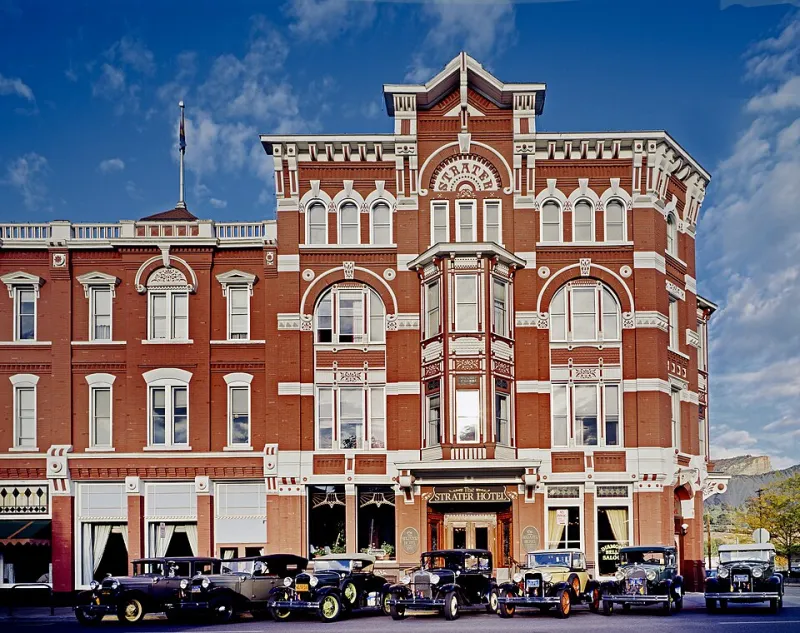
Photo: Carol M. Highsmith, Public domain, via Wikimedia Commons
There is a particular kind of knowledge that cannot be typed into a search bar. It lives in the hands—in the precise angle of a wrist when cracking ice, in the almost imperceptible pause before a pour is cut short, in the reading of a room that tells a seasoned bartender whether the gentleman at the corner stool wants conversation or silence. For most of American drinking history, this knowledge moved not through manuals or video tutorials but through proximity: one person watching another, season after season, until the watching became doing and the doing became instinct.
The apprenticeship system that governed American bartending for the better part of two centuries was not a formal institution. It had no curriculum, no certification, and no graduation ceremony. What it had was time—and the kind of sustained, attentive relationship between a junior and a senior practitioner that is genuinely difficult to replicate through a screen.
The Hotel Bar as Classroom
In the decades spanning the late nineteenth century through Prohibition and into the mid-twentieth, the great hotel bars of American cities functioned as something close to conservatories of the craft. The Palmer House in Chicago, the Waldorf-Astoria in New York, the St. Francis in San Francisco—these establishments maintained staffs of considerable size and rigid hierarchy. A young man entering such a place did not step behind the bar on his first day. He bussed tables. He polished glassware. He watched.
The head bartender in these rooms was often a figure of considerable authority, and his knowledge was dispensed selectively. You earned the right to a lesson by demonstrating patience and attentiveness. Jerry Thomas, whose 1862 Bar-Tender's Guide remains the foundational document of American cocktail literature, was himself a product of this culture—a man who moved from establishment to establishment, absorbing technique and refining it before eventually codifying what he knew. But the book, it should be said, was never meant to replace the apprenticeship. It was a supplement to it, a record for those who already understood the underlying grammar of the bar.
The hierarchy was explicit. A barback did not become a bartender in six months. In the finest establishments, the progression might take years. And the knowledge transferred during that time extended far beyond recipes. It encompassed the management of difficult customers, the maintenance of equipment, the sourcing and evaluation of ingredients, and the subtler arts of hospitality that no recipe card can capture.
What the Speakeasy Preserved
Prohibition, counterintuitively, did not destroy this tradition—it scattered it. American bartenders who refused to abandon their profession moved to Europe, particularly to London and Paris, where they continued practicing and teaching in hotel bars and private clubs. Those who remained in the United States found ways to work within the speakeasy system, and the mentorship culture persisted in those clandestine rooms, adapted to more urgent circumstances.
The speakeasy era produced its own kind of pedagogy, one shaped by necessity and improvisation. Ingredients were unreliable; the clientele was unpredictable; the legal stakes were real. A young bartender learning in that environment absorbed something that no formal instruction could easily replicate: the capacity to problem-solve under pressure, to make something good from imperfect materials, and to maintain composure when the situation demanded it. These were skills passed laterally as much as vertically—peer to peer, colleague to colleague—but they were still transmitted through direct human contact.
The Weight of Watching
Elmer Meyers, who tended bar in Philadelphia from the early 1940s through the 1970s, once described his first year behind the stick in terms that resonate deeply with anyone who has studied this history. "You didn't ask questions," he recalled in a 1994 interview preserved in a regional oral history archive. "You watched. You watched how he held the bottle. You watched how he talked to people. You watched what he did when something went wrong. Then one day, without anyone saying anything, you were doing it yourself."
This is not a romantic notion. It is a description of a specific pedagogical method—observational learning reinforced by repetition and corrected, when necessary, by the quiet intervention of a more experienced hand. The correction itself was often nonverbal: a repositioning of a glass, a redirected pour, a look that communicated everything necessary without a word.
What this system demanded of the learner was, above all, humility. The willingness to spend months in a subordinate role, absorbing information without the immediate gratification of visible progress, runs counter to the expectations that digital culture has cultivated. We have grown accustomed to rapid feedback loops, to the sense that competence should arrive on a schedule.
The Democratic Disruption
It would be dishonest to frame the shift toward online learning as pure loss. The democratization of bartending knowledge has genuine virtues that deserve acknowledgment. A young woman in rural Mississippi who harbors serious ambitions behind the bar no longer needs to relocate to a major city and spend years in servitude to a difficult mentor. She can access the accumulated knowledge of working professionals through platforms, podcasts, and video channels that would have seemed extraordinary to any bartender working before 1990.
The spirits industry itself has responded to this new landscape with education programs of real substance. Certification courses from organizations like the United States Bartenders' Guild and the Wine & Spirits Education Trust have given structure to a craft that historically resisted formalization. These are not trivial contributions.
And yet. The bartenders who came up through the old system tend to speak about their training with a particular quality of reverence that is difficult to dismiss as mere nostalgia. What they describe is not simply the acquisition of technique but the formation of professional identity—a sense of belonging to a lineage, of being accountable to those who came before and responsible to those who would come after.
What Mastery Actually Requires
The deeper question, and the one that matters most for the future of the craft, is whether genuine mastery—not competence, not proficiency, but the kind of deep fluency that distinguishes a truly great bartender from a technically adequate one—can be achieved outside the context of sustained mentorship.
The evidence from adjacent fields is not especially encouraging. Medical training still requires residency. Legal training still requires clerkship. The performing arts still require the conservatory, the ensemble, the rehearsal room. In each of these disciplines, the consensus has held that there is something irreplaceable about learning under the direct supervision of someone who already knows.
Bartending is not surgery, and the stakes are different. But the craft, at its highest expression, involves a complexity that rewards long study. The great bartenders of the current generation—those who have earned genuine reputations for excellence rather than social media followings—tend, almost without exception, to have spent significant time working alongside people who knew more than they did. The platform may have changed. The fundamental requirement has not.
The bar, at its best, has always been a place where knowledge lives in the body before it lives anywhere else. That is a truth worth defending, regardless of what the algorithm recommends.