The Guest Is Always Right: How America's Best Bars Learned to Stop Lecturing and Start Listening
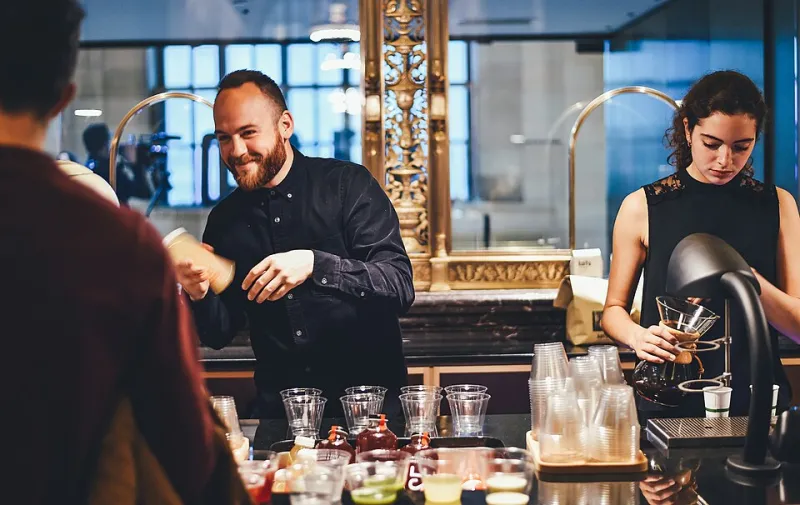
Photo: Crew crew, CC0, via Wikimedia Commons
A Reckoning Behind the Bar
There is a particular kind of discomfort that comes from ordering the wrong thing at the wrong bar. Anyone who spent time in America's more self-serious cocktail establishments during the early years of this century will recognize it: the slight pause before the bartender responds, the barely suppressed sigh, the gentle but unmistakable suggestion that what you have requested reveals some deficiency of taste or knowledge. You wanted a vodka soda. They wanted you to want a Negroni.
That dynamic — the bartender as gatekeeper, the customer as initiate — shaped a great deal of what passed for high-end drinking culture in the United States for the better part of two decades. It produced some genuinely extraordinary cocktails. It also produced a hospitality culture that, at its worst, felt less like a bar and more like an examination.
Something has shifted. Quietly, and without much fanfare, the most thoughtful establishments in American drinking are reconsidering what it means to serve a guest well — and the results are, in nearly every respect, more interesting than what came before.
The Origins of the Gatekeeping Problem
To understand why this shift matters, it helps to recall where the attitude originated. The cocktail revival of the late 1990s and early 2000s was, in many ways, a corrective movement. Decades of industrial spirits production, premixed sour mix, and an industry that had largely abandoned craft had left American bar culture in a genuinely diminished state. The people who rebuilt it — bartenders like Dale DeGroff in New York, Audrey Saunders, Sasha Petraske — were working against significant cultural inertia. Fresh juice, proper technique, historically accurate recipes: these were not affectations. They were acts of restoration.
But restoration movements have a tendency to calcify. What began as a principled rejection of the mediocre gradually, in some quarters, hardened into something more exclusionary. The knowledge that had been assembled with such care became a credential, and credentials, in any field, invite gatekeeping. The cocktail bar, which had always been among the most democratic of American institutions, found itself hosting a new kind of hierarchy.
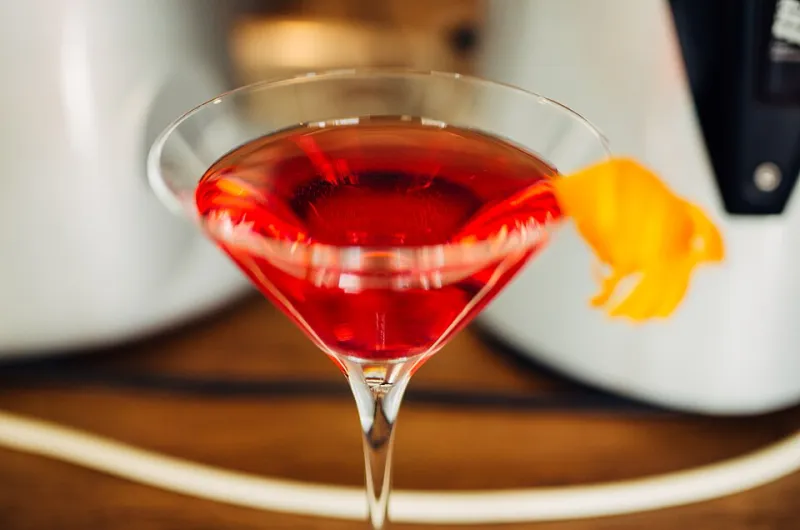
Customers who did not know the difference between Old Tom gin and London Dry, who preferred their drinks sweet, who asked for a Cosmo in 2009 — these were not always treated with patience. And that condescension, however well-intentioned its origins, was a betrayal of what the bar has historically been for.
What Listening Actually Looks Like
The shift that has occurred in recent years is not a retreat from quality. That distinction matters enormously. The bars leading this change are not serving worse drinks; they are, in most cases, serving better ones. What has changed is the orientation — the fundamental question the bartender is asking.
The old question, implicit in a certain style of service, was: How do I introduce this guest to what I believe they should be drinking? The new question is simpler and, in practice, considerably more demanding: What does this particular person actually want, and how do I make it as well as it can possibly be made?
This sounds straightforward. It is not. Making a genuinely excellent Midori sour — if that is what someone wants — requires more than indulgence. It requires technical skill, quality ingredients, and an absence of irony. It requires the bartender to bring the same attention to a drink they might not personally admire that they would bring to their most celebrated house creation. That is a harder discipline than simply steering every customer toward the approved list.
Bars like Attaboy in New York, which built its reputation on the riff — the bartender's interpretation of your stated preferences, executed without a written menu — have demonstrated that this approach is not only hospitable but commercially durable. The guest feels heard. The bartender exercises genuine creativity. The result is often more interesting than either party anticipated.
Education Without Condescension
None of this means that the accumulated knowledge of the cocktail revival should be set aside. The history, the technique, the understanding of how spirits are made and how flavors interact — these remain the foundation of serious bar work. What is changing is the manner in which that knowledge is shared.
The best bartenders working today understand something that the previous generation sometimes forgot: education is most effective when it is not announced as such. A guest who orders something sweet and is given something bitter without explanation has not been educated; they have been dismissed. A guest who orders something sweet and receives a thoughtful question — Do you enjoy citrus? Do you mind a little herbal quality? — is being drawn into a conversation. The distinction between those two interactions is the entire difference between hospitality and performance.
This conversational approach has roots that predate the cocktail revival by well over a century. The great saloon keepers of the nineteenth century — the Jerry Thomases and Harry Johnsons of the trade — were celebrated precisely because they could read a room and a guest. They were not performing expertise; they were applying it in service of the person standing at the bar. The revival, at its best, is returning to that tradition.
What the Industry Learned the Hard Way
The pandemic, for all the devastation it visited upon the hospitality industry, accelerated certain reckonings that were already underway. Bars that had built their identity around a particular kind of austere seriousness found themselves reconsidering what, exactly, that identity was for. Revenue, obviously, was part of the calculation. But so was something more fundamental: the question of whom the bar existed to serve.
The establishments that emerged from that period in the strongest position were, by and large, the ones that had already begun prioritizing genuine hospitality over the performance of expertise. They had loyal customers — people who returned not because they had been converted to a particular cocktail philosophy, but because they had been made to feel welcome.
That is not a small thing. The history of American drinking is, in no small part, a history of the bar as a place of belonging. The tavern, the saloon, the speakeasy, the neighborhood cocktail lounge — these were institutions that derived their meaning from community. A bar culture that had drifted toward exclusivity was, in some sense, cutting itself off from its own inheritance.
The Better Bar, Redefined
What does the better American bar look like now? It looks, increasingly, like a place where a guest can order a classic Daiquiri or a well-made Aperol spritz without apology, where the bartender's knowledge is evident in the quality of the drink rather than the tenor of the conversation, and where the experience of being served is not contingent on passing some unstated test of sophistication.
It looks, in other words, like a bar that has remembered what bars are for.
The cocktail renaissance produced real and lasting achievements. The spirits are better, the techniques are more refined, and the historical record of American drinking has been recovered with a thoroughness that would have seemed improbable thirty years ago. None of that needs to be sacrificed in order to treat the person at the bar with genuine respect.
The guest who orders a vodka soda in 2024 is not the enemy of craft. They are a customer, and quite possibly a future enthusiast, and they deserve the same quality of attention as anyone else who has taken a seat and asked to be served. The bars that have figured this out are, at present, the most interesting places to drink in America. That is not a coincidence.