The Museum Behind the Bar: How Reverence for the Past Became a Cage for the Present
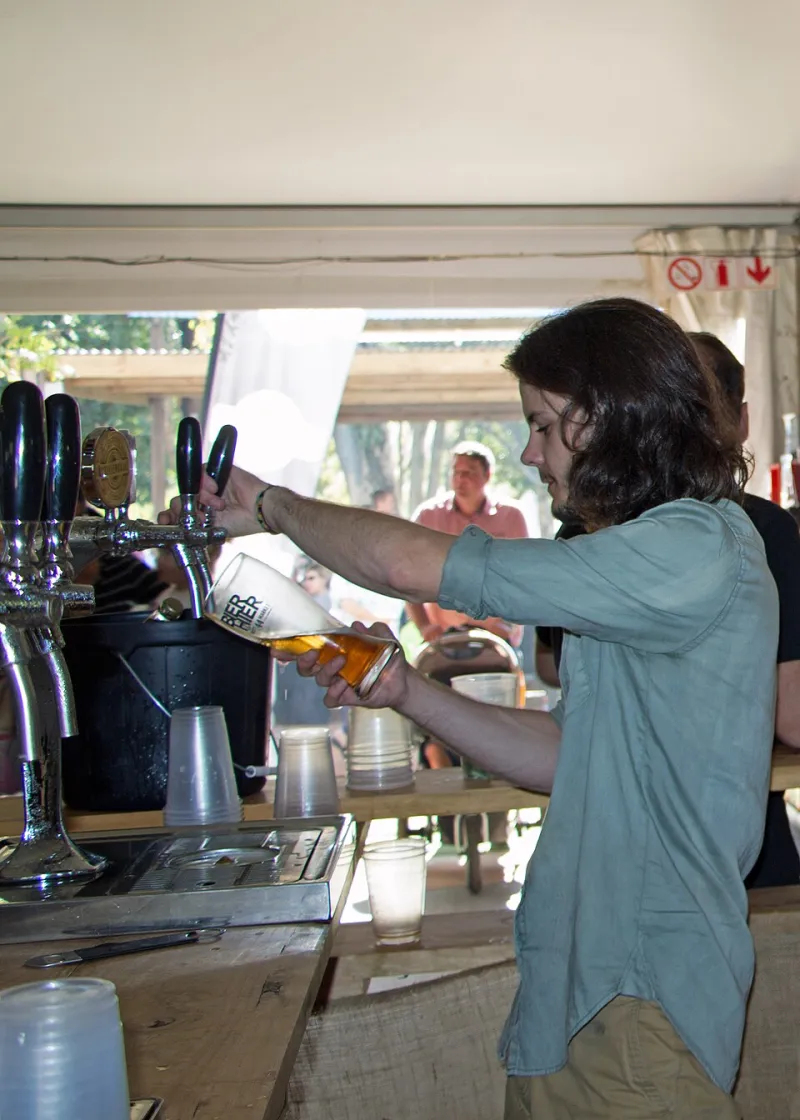
Photo: HelenOnline, CC BY-SA 3.0, via Wikimedia Commons
There is a particular kind of pride that settles over a bartender who has sourced the correct Jamaican rum for an 1880s punch, tracked down a pre-Prohibition formula for a forgotten bitters, and reproduced a drink that nobody living has tasted in its original form. It is legitimate pride, earned through genuine scholarship and no small amount of obsessive effort. I have felt something close to it myself, and I do not wish to diminish it.
But pride in reconstruction is not the same thing as the act of creation. And somewhere in the last decade, as the craft cocktail movement matured into something resembling an institution, these two impulses — the historian's and the inventor's — became dangerously confused.
How the Revival Became a Rut
The great cocktail renaissance of the late 1990s and early 2000s was, at its core, an act of recovery. The spirits and drinks that Prohibition had buried, and that postwar convenience culture had finished off, needed to be excavated. That work required bartenders who were willing to become researchers, who would read through nineteenth-century bar manuals with the same attention a musicologist brings to a recovered score. Figures like Dale DeGroff, Sasha Petraske, and a generation of their disciples did exactly that, and American drinking is immeasurably richer for it.
The problem is structural. Once a movement defines itself through recovery, it risks mistaking fidelity for excellence. The metrics shift. A bartender is praised not for the originality of a new drink but for the accuracy of an old one. Menus begin to read like syllabi. The Improved Whiskey Cocktail, the Corpse Reviver No. 2, the Jungle Bird — all magnificent, all worthy of attention — cycle through bar programs from Portland, Maine to Portland, Oregon with a consistency that would have struck any nineteenth-century saloonkeeper as baffling. Why would you serve the same drink they're serving down the street?
The Tyranny of Authenticity
Authenticity is a word that has done considerable damage to American bar culture. It arrived as a corrective — a pushback against the artificial syrups and the premixed sour mixes and the general degradation of the craft — and in that context it was both useful and necessary. But authenticity, like most virtues, curdles when taken to an extreme.
When a bartender feels compelled to justify every ingredient choice by reference to historical precedent, when the highest compliment a drink can receive is that it tastes like something from another century, when the very idea of invention seems vaguely suspect — as though making something new is a kind of presumption — then authenticity has become a constraint rather than a standard.
I have sat at bars where the menu lists twelve cocktails, all of them recognizable variations on pre-Prohibition templates, and where the bartender's evident mastery of technique is deployed entirely in service of the past. The drinks are often excellent. But there is something melancholy about watching a gifted mind operate entirely within borrowed architecture.
What the Old Bartenders Actually Did
Here is the historical irony that tends to get lost in all of this: the bartenders we venerate most were not, themselves, engaged in historical recreation. Jerry Thomas was not trying to reproduce the drinks of a previous generation. He was making his own. Harry Johnson was not curating; he was inventing. The cocktail manuals we treat as sacred texts were, at the time of their writing, documents of contemporary innovation — records of what was new, not what was old.
The Golden Age of American bartending was golden precisely because it was a culture of relentless experimentation. The bar was a laboratory. Ingredients were combined, rejected, recombined. Drinks were named after local celebrities, seasonal ingredients, passing fancies. They were products of their moment, not monuments to someone else's.
To honor that tradition faithfully would mean doing what those bartenders did: making something new. The deepest form of respect for Jerry Thomas is not to reproduce his Blue Blazer. It is to develop the same appetite for invention that produced it.
Signs of Life
This is not to say that contemporary bartenders are uniformly incapable of originality. They are not, and it would be unfair to suggest otherwise. The problem is less about individual talent than about the incentive structures surrounding it. A bartender who builds a menu around original creations takes a commercial risk. A bartender who offers a well-executed Vieux Carré is offering something the customer already trusts.
There are bartenders working today — in New York, in Chicago, in New Orleans, in Los Angeles — who are doing genuinely original work: drawing on non-Western flavor traditions, incorporating fermented ingredients in ways that have no historical precedent in Western bar culture, thinking seriously about what American drinking in 2024 might actually taste like rather than what it tasted like in 1904. These people deserve more attention than they typically receive.
The bar press, to its credit, has begun to notice. But the framing often remains historical — a new drink is praised for what it evokes rather than for what it is. The vocabulary of cocktail criticism has not yet fully developed the tools to evaluate novelty on its own terms.
The Case for Invention
What would it mean for a bartender to take the present as seriously as the past? It would mean, first, a willingness to fail — to put a drink on the menu that has no historical legitimacy to fall back on, that must stand or fall entirely on its own merits. It would mean developing a personal point of view about flavor, about balance, about what a drink ought to accomplish in the body and the mind of the person drinking it.
It would also mean accepting that not every original drink will be good, and that this is fine. The nineteenth-century bar books are full of drinks that were tried and abandoned, recipes that went nowhere, experiments that failed. What those bartenders understood, and what their contemporary heirs sometimes forget, is that the failures are the price of the successes.
The craft cocktail movement rescued American drinking from decades of degradation. That is not a small thing, and it should not be casually dismissed. But a rescue operation is not the same as a destination. The work of recovery is, by its nature, preparatory — it clears the ground for something new to grow.
The question for the next generation of American bartenders is whether they are willing to do the harder, riskier, more uncertain work of actually building something on that cleared ground. History will not tell them what to put in the glass. That part is up to them.