Past Its Prime: Why the Best Bars in America Have Finally Stopped Pretending It's 1922
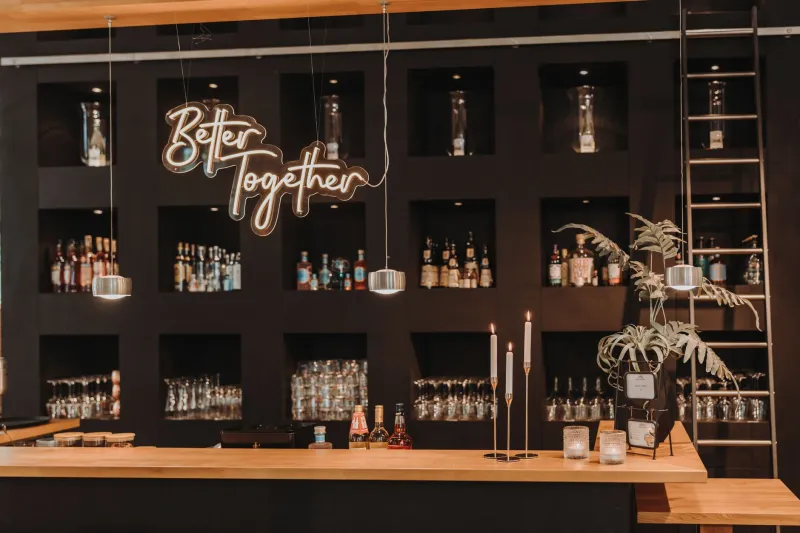
There is a certain kind of bar that most American drinkers of a particular generation will recognize on sight. The entrance is deliberately obscured — perhaps behind a bookcase, perhaps through a door marked with nothing more than a telephone number. Inside, Edison bulbs cast amber light over exposed brick. The bartenders wear vests. The menu is printed on aged parchment, or possibly a broadsheet, and every cocktail is named after a figure who died before the invention of the television. The whole enterprise is a theater of the Prohibition era, performed nightly for an audience that was not, in the strictest sense, invited to audition.
This is the speakeasy aesthetic, and for roughly fifteen years it served as the default grammar of serious cocktail culture in the United States. It was, at its best, a sincere homage — a movement that genuinely rescued lost techniques, revived forgotten spirits, and reminded a generation of drinkers that a cocktail could be something other than a fluorescent shot consumed under stadium lighting. At its worst, it became a costume, a shorthand for seriousness that required no actual seriousness to deploy.
The good news is that something has changed.
The Mythology and Its Discontents
To understand the shift, one must first give the speakeasy revival its proper due. When Sasha Petraske opened Milk & Honey on New York's Lower East Side in 1999, he was not trafficking in nostalgia for its own sake. He was proposing a philosophy — that a bar could be a quiet, considered space; that service mattered; that ice mattered; that the guest mattered. The Prohibition-era framing was partly atmospheric and partly a way of signaling seriousness to a culture that had largely forgotten what a serious bar looked like.
The movement spread, and spread, and spread. By the mid-2000s, the speakeasy template had been adopted from Seattle to Miami, from Chicago to Austin. By the early 2010s, it had become something closer to a franchise model — the hidden door, the seasonal bitters, the cocktail that takes twelve minutes to build and arrives under a cloche of aromatic smoke. The original philosophy had become a set of props.
The problem with organizing an aesthetic around a historical moment is that the historical moment, examined closely, is not quite what the aesthetic suggests. The speakeasies of actual Prohibition-era America were not, by and large, temples of craft. They were, in many cases, places of desperation and compromise, serving adulterated spirits to people who had no legal alternative. The romance belongs largely to the era's fringes — to the hotel bars that survived on near-beer and ingenuity, to the great bartenders who emigrated to London and Havana and Paris and kept the flame alive in exile. The mythology, in other words, was always somewhat selective.
Where the Recalibration Began
Pinpointing the moment when American cocktail culture began to interrogate its own nostalgia is less straightforward than identifying the nostalgia itself. The shift was gradual, and it came from several directions at once.
One force was generational. The bartenders who came of age during the first wave of the craft cocktail revival had absorbed its lessons thoroughly enough to move past them. They knew how to make a proper Daiquiri and a historically accurate Martini. Having mastered the canon, they were ready to write something new.
Another force was geographical. Cities like Nashville, Denver, and Portland developed bar cultures that had less investment in the New York speakeasy mythology to begin with. Bars in these markets began drawing on regional history — on the drinking cultures of the American South, the Pacific Northwest, the mountain West — rather than reaching back to a shared national mythology that had never quite fit their particular landscapes.
A third force, perhaps the most significant, was intellectual honesty. The better thinkers in the industry began to notice that genuine cocktail history is considerably richer, stranger, and more interesting than the speakeasy narrative allows. The golden age of American drinking, properly understood, extends from roughly the 1860s through the early years of the twentieth century — a period that predates Prohibition by decades and encompasses traditions, techniques, and characters that the speakeasy revival had largely ignored.
Building Without a Borrowed Blueprint
The bars making the most interesting arguments today tend to share a quality of self-determination. They are not organized around a borrowed past; they are organized around a specific point of view.
In New Orleans, where the relationship between drinking culture and civic identity has always been unusually direct, a new generation of bars has begun engaging with the city's actual pre-Prohibition history rather than a generalized Prohibition aesthetic — drawing on the Creole culinary tradition, on the history of the city's French and Spanish and African influences, on a drinking culture that is genuinely local rather than generically vintage.
In Chicago, bars have begun building identities around the agricultural abundance of the Midwest — around local grains and regional spirits and a flavor vocabulary that owes more to the Great Plains than to a Manhattan basement. In Los Angeles, the influence of Mexican and Central American drinking traditions has begun reshaping what a serious bar can look like, sound like, and serve.
None of these developments require the abandonment of historical knowledge. On the contrary, they require more of it. Understanding why a bar in New Orleans should serve differently from a bar in Chicago requires a genuine engagement with the history of both places, not a superficial application of sepia tones and period typography.
A More Honest Relationship With the Past
There is an argument to be made — and I would make it — that this recalibration is actually a more respectful engagement with cocktail history than the speakeasy mythology it displaces. The mythology, for all its charm, reduced a complex and variegated history to a single dramatic episode. It treated the 1920s as the center of gravity around which all cocktail culture must orbit.
The best bars working today treat history as a resource rather than a costume. They study the past not because it provides an aesthetic template but because it provides knowledge — about technique, about flavor, about the social functions that drinking has served in different times and places. They understand that the history of American drinking is long and layered and genuinely fascinating, and that the speakeasy is only one chapter in a very long book.
This is, in the end, what the craft cocktail movement was always supposed to be about: not the reproduction of a particular historical moment, but the recovery of a particular historical seriousness. The bars that have moved beyond the speakeasy aesthetic have not abandoned that seriousness. They have extended it.
The bookcase door, the broadsheet menu, the vest — these things had their moment, and it was not without merit. But a culture that defines itself entirely by its nostalgia is a culture that has stopped growing. The most encouraging development in American cocktail culture today is the evidence, accumulating steadily, that the industry has recognized this — and has decided, at last, to grow.