What You Didn't Know Made It Taste Better: The Lost Power of the Unread Recipe
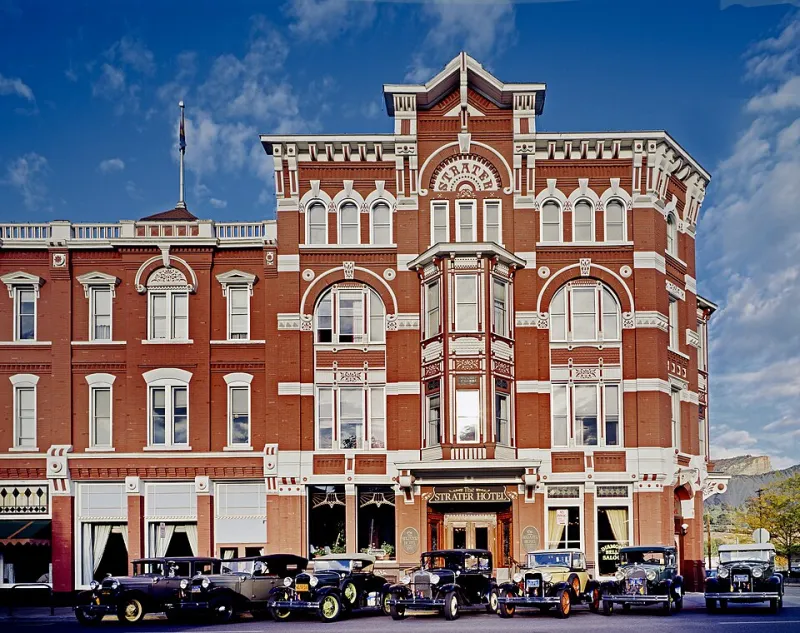
Photo: Steve Shook from Moscow, Idaho, USA, CC BY 2.0, via Wikimedia Commons
There is a particular kind of drinker who arrives at the bar already defeated. He has consulted three apps, cross-referenced two subreddits, and watched a twelve-minute video in which a man with exceptional lighting explains the precise ratio of rye to sweet vermouth that separates an acceptable Manhattan from a transcendent one. He orders. The drink arrives. He tastes it, furrows his brow, and announces that it doesn't quite match what he was expecting.
What he was expecting, of course, was not a drink. It was a confirmation.
This is the peculiar condition that radical transparency has visited upon American cocktail culture — a world in which the full specification of nearly every drink ever conceived is available at the touch of a screen, and in which that abundance of information has made the act of simply enjoying a glass of something considerably more difficult than it used to be.
The Recipe as Oracle
There was a time, not so very long ago, when the cocktail recipe occupied a position closer to rumor than instruction. The great bartenders of the late nineteenth and early twentieth centuries guarded their formulas with genuine jealousy. A house specialty was a commercial asset, not a contribution to the public commons. Jerry Thomas published his Bar-Tender's Guide in 1862, and while he deserves enormous credit for committing the craft to print, he was also, by any honest accounting, sharing what he was comfortable sharing — which was not always everything.
The drinks that passed between bartender and customer in the decades that followed existed in a kind of productive ambiguity. You knew what you ordered. You knew, more or less, what category of spirit anchored it. But the precise quantities, the specific brands, the particular technique — these were the bartender's business, not yours. What was yours was the glass in your hand and the judgment you formed about what was in it.
That judgment, uncontaminated by specification, was a remarkably direct transaction between the senses and the mind.
When Ignorance Was an Asset
Cognitive science has spent considerable energy documenting what the drinks trade has largely preferred to ignore: that prior knowledge reshapes sensory experience in ways that are not always flattering to the knowledge itself. When a drinker knows he is tasting a bottle positioned at the premium end of the market, he tends to report greater satisfaction — not because the liquid has changed, but because his expectation has. Conversely, when he knows precisely what a drink is supposed to taste like before he tastes it, any deviation from that mental template registers as failure rather than as interesting variation.
The pre-internet drinker had no such template to protect. He walked into a bar in New Orleans or Chicago or San Francisco, ordered something he'd heard mentioned in passing, and received whatever interpretation the man behind the mahogany chose to deliver. If it was good, it was simply good. There was no apparatus through which to conclude that it was good despite containing the wrong proportion of Angostura.
This is not a sentimental argument for ignorance as a virtue in itself. It is an observation that sensory pleasure is a more complex transaction than the recipe-forward culture of contemporary cocktails acknowledges — and that the tools we have developed to optimize the drink have, in certain respects, interfered with the drinking.
The Tyranny of the Transparent Formula
Social media has accelerated this dynamic to a degree that would have seemed implausible even fifteen years ago. Platforms built around visual content have made the cocktail simultaneously more visible and more prescribed than at any point in its history. A drink that achieves circulation on Instagram arrives in the drinker's imagination fully formed — color, garnish, glassware, and, typically, a caption that includes the recipe down to the half-milliliter.
By the time a person orders that drink in an actual bar, they have, in a meaningful sense, already consumed it. What they receive from the bartender is not a discovery but an audit. The question is no longer do I enjoy this but does this match.
The bartenders feel it too. Ask any working professional behind a serious bar in New York or Los Angeles or Chicago, and they will describe, with varying degrees of diplomatic restraint, the experience of serving a guest who has arrived with a printed specification and a suspicion. The drink becomes a test rather than an offering. The relationship between the person who made it and the person receiving it — historically a relationship built on a certain degree of faith — collapses into something closer to a quality-control inspection.
What the Mystery Was Actually Doing
It would be easy to romanticize the opacity of earlier drinking culture without accounting for its genuine failures. Plenty of drinks that no one could read the recipe for were bad. Plenty of bartenders who guarded their formulas were guarding mediocrity. The democratization of cocktail knowledge has produced real and lasting good: a broader public literacy about spirits, a generation of exceptionally skilled and thoughtful bartenders, and a general elevation of what Americans expect when they sit down at a bar.
But the mystery was doing something that the recipe cannot replicate. It was placing the drinker in a posture of receptivity rather than evaluation. It was asking the palate to work without a rubric. It was, in the most literal sense, allowing the drink to be experienced rather than assessed.
The Sidecar you ordered in 1955 at a hotel bar in Philadelphia arrived without a genealogy. You did not know whether the bartender had used Cointreau or triple sec, whether the lemon juice was fresh or bottled, whether the cognac was Hennessy or something from a well you'd never heard of. You tasted it. You formed an opinion. That opinion was, by necessity, your own.
Reclaiming the Unmediated Glass
None of this argues for burning the recipe books. Jerry Thomas and Hugo Ensslin and David Embury wrote their guides for good reasons, and those reasons remain sound. The historical record they preserved has been indispensable to the revival of serious cocktail culture in this country, and this site has spent considerable effort celebrating that record.
What it does argue for is a more deliberate relationship with the information we now carry into every drinking experience. The recipe is a tool, not a verdict. The measurement is a starting point, not a boundary. And the drink in your hand — whatever its precise provenance, whatever its distance from the canonical formula — is, finally, something to be tasted rather than graded.
There is a version of cocktail culture that trusts the glass more than the specification. It existed before the internet, and it produced some of the most satisfying drinking this country has ever known. The ingredients for that experience are still available. They simply require setting down the phone.