After the Dust Settles: Auditing the Great Lockdown Home Bar, Five Years On
Somewhere in America, in a closet or a basement or the back of a kitchen cabinet, there is a bottle of crème de violette gathering dust. It was purchased, with great conviction, sometime in the spring of 2021. It has been opened twice.
It is not alone. The great home bar boom of the pandemic years — that feverish season of mail-order bitters, dehydrated citrus wheels, and smoked glassware — has largely receded, and what it left behind deserves an honest accounting. Not to mock it. To learn from it. Because the way those bars rose, and the way most of them quietly fell, tells us something true about how Americans actually form — and abandon — drinking rituals.
The Numbers Behind the Boom
The figures from the period still astonish. Spirits sales in the United States jumped sharply in 2020, with much of the gain coming not from bars, which were closed, but from retail. Cocktail-specific purchases — mixers, vermouth, bitters, bar tools — surged alongside them. Muddlers sold. Atomizers sold. There was, briefly, a national run on Campari.
A generation of home drinkers who had never mixed a drink in their lives suddenly had opinions about dilution. YouTube tutorials on the Negroni racked up millions of views. The home bar, an institution long associated with the wood-paneled dens of the 1970s, came roaring back with better taste and worse lighting.
Then the bars reopened. And something curious happened.
What Survived
The wind-down was not uniform, and that is where it gets interesting. Talk to retailers and you hear the same story: the boom purchases split into two categories almost immediately.
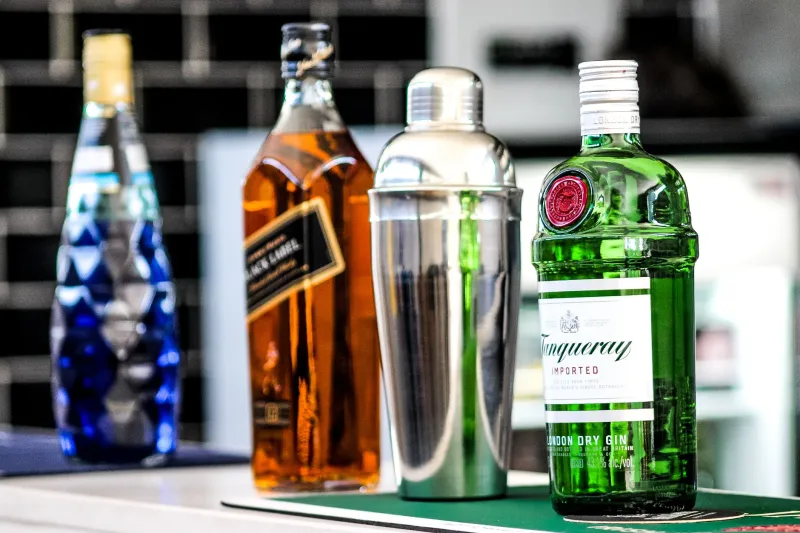
The survivors were the fundamentals. Good mixing glassware. A heavy shaker. Decent vermouth, kept in the refrigerator once someone learned why that mattered. Citrus. Ice molds. The people who kept drinking cocktails at home — and plenty did, even after the return of the neighborhood bar — consolidated around a small kit and a short repertoire. Three or four drinks, made well, once or twice a week. This is, historically speaking, exactly how home drinking has always worked in America. The martini household. The Manhattan household. The gin-and-tonic household. Rituals form around repetition, not repertoire.
What Became Shelf Dust
The casualties were the specialties. The crème de violette. The allspice dram. The second, artisanal bottle of bitters, and the third. Liqueurs, in particular, proved to be the great home bar trap: expensive, indispensable for one specific drink, and nearly impossible to finish before the flavor fades. A bar professional goes through a bottle of Maraschino in weeks. A home enthusiast, making one Aviation a month, does not.
The gadgets fared worst of all. The smoking guns, the centrifuges, the clarifying agents — the apparatus of the modernist bar — mostly ended up in the same place as the bread machines of an earlier craze. Not because the techniques were fraudulent, but because they demanded labor in excess of reward. The home bartender, it turned out, wanted a drink, not a project.
What It All Means
There is a temptation to read the wind-down as failure. It was not. The pandemic bar boom functioned, for millions of Americans, as an education. It taught a broad public the difference between a shaken and a stirred drink, why fresh citrus matters, and what vermouth actually is. Those lessons did not evaporate when the bottle cabinets emptied.
What faded was the performance. The home bar as theater — the full back-bar display, the dehydrated garnish, the smoked glass — was a costume worn for an audience that, once the world reopened, went back to the actual bar. What remained was quieter and, frankly, better: the after-work Negroni, the weekend martini, the small kit used often.
That is the real legacy of the boom. Not the shelf dust, and not the smoking gun in the closet, but the millions of American households that now keep a bottle of sweet vermouth in the fridge and know why. History suggests that is how every drinking ritual survives — not as spectacle, but as habit.
The crème de violette, meanwhile, is still in the closet. Someone will get to it eventually. Perhaps for an Aviation. Perhaps it will simply wait, patiently, for the next craze.