The Unspoken Transaction: How American Bartenders Navigate the Space Between Knowledge and Hospitality
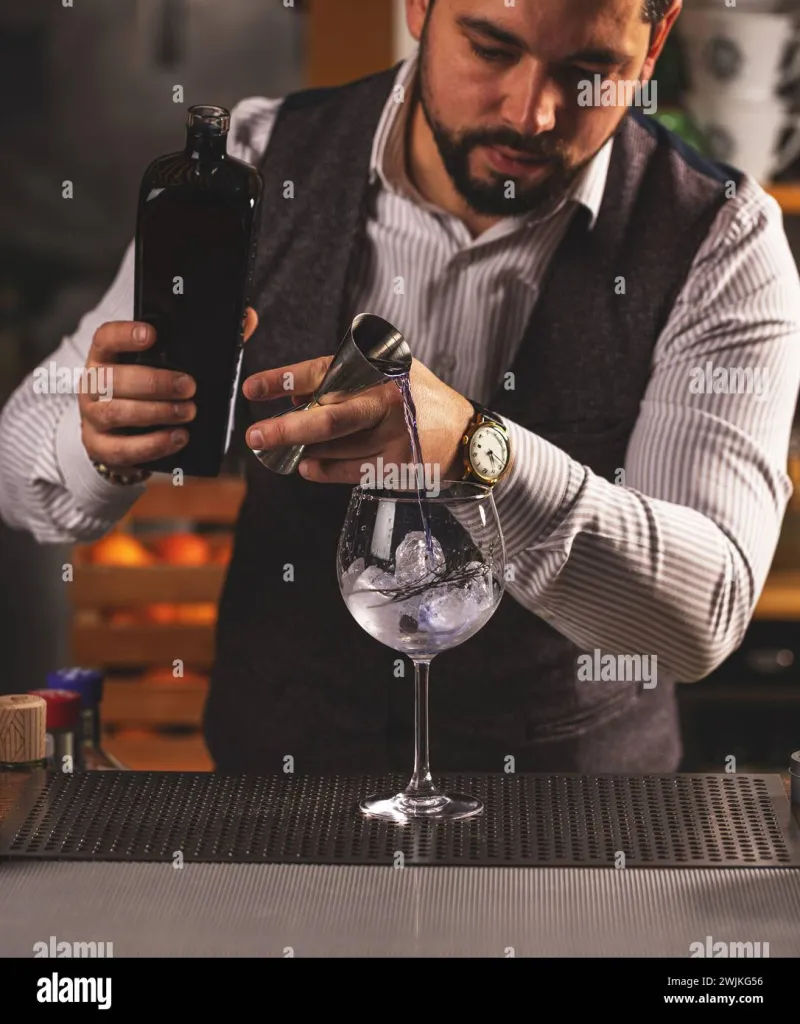
Consider the position of the well-trained American bartender in the year 2024. They have, in all likelihood, studied for their craft with a seriousness that previous generations of bar professionals would have found remarkable. They have passed examinations, read primary sources, tasted spirits across categories with systematic attention, and developed a working vocabulary for flavor that draws on disciplines ranging from sensory science to culinary history. They know, in genuine and useful detail, why the drink in front of them tastes the way it does.
They also know, with equal clarity, that the guest standing across the bar did not ask for a lecture. And that the hospitality culture in which they operate has developed a powerful set of norms—largely unwritten, deeply felt—against any display of expertise that might be perceived as condescension. The bartender's knowledge is real. The constraint on its deployment is equally real. The space between them is where the most interesting negotiations in American bar culture are currently taking place.
The Education That Preceded the Problem
To understand the current situation, it helps to appreciate how substantially bartender education has changed in the past twenty years. The cocktail revival that gathered momentum in the early 2000s brought with it a conviction—shared by its leading figures—that the American bartender ought to be a professional in the fullest sense of the word. Organizations devoted to spirits education proliferated. Certification programs emerged. The industry press began covering bar culture with the seriousness previously reserved for restaurant kitchens.
The result is a cohort of American bartenders whose knowledge of spirits is, by any historical measure, extraordinary. A bartender working at a serious cocktail establishment in New York, Chicago, or San Francisco today may possess a more thorough understanding of distillation, fermentation, and the history of the American bar than any figure working behind a professional bar in the nineteenth century—including those figures we now regard as the founding generation of the craft.
This education was not acquired in order to be concealed. It was acquired in order to be shared, in the belief that an informed guest is a better guest, and that the exchange of knowledge across the bar is one of the things that distinguishes a cocktail establishment from a dispensary. The expectation, when the training programs were designed, was that expertise would flow freely from the bar to the customer.
Where the Hospitality Code Intervenes
The hospitality norms that constrain this flow are not arbitrary. They developed in response to a real problem: the early cocktail revival produced, in some quarters, a bar culture that was more interested in demonstrating knowledge than in serving guests. The bartender who corrected a customer's pronunciation, who responded to a simple request with an unsolicited history of the spirit in question, who treated every order as an opportunity for pedagogy—this figure was real, and was experienced by many guests as alienating. The backlash was legitimate.
The correction, however, may have overshot. The contemporary hospitality culture that emerged from that backlash operates, at its most cautious, on a principle of radical guest deference: the customer's stated preference is sovereign, their knowledge is to be affirmed rather than challenged, and any expertise the bartender possesses should be deployed only when explicitly solicited. This principle, applied with good judgment, produces excellent service. Applied without it, it produces a situation in which a bartender who knows that a guest would genuinely enjoy something different from what they have ordered is professionally discouraged from saying so.
The consequences are visible in how American bars are now designed and staffed. Menu engineering has become, in part, a discipline of substitution—of finding ways to guide guests toward good choices without the guidance appearing to be guidance. The cocktail description that emphasizes familiar flavor reference points rather than spirit categories is doing the work that a conversation might otherwise do. The prix-fixe tasting menu format, adopted by a small number of ambitious cocktail bars, eliminates the choice architecture entirely by removing the choice. These are structural solutions to a problem that is, at its core, communicative.
The Negotiation Across the Bar
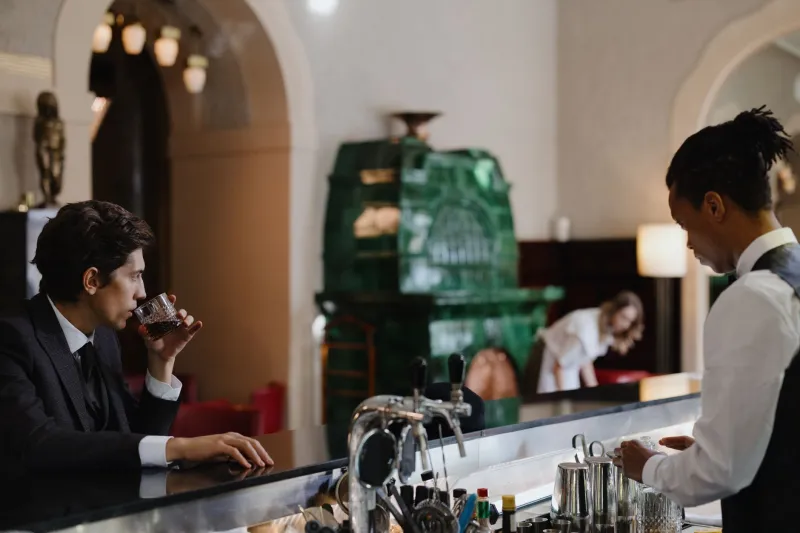
What actually happens, in practice, between a knowledgeable bartender and an undecided guest is a negotiation conducted largely in implication. The bartender who asks a guest whether they prefer their drinks on the drier or sweeter end of the spectrum is gathering information while appearing only to inquire. The follow-up question about whether they tend toward spirit-forward or more approachable drinks narrows the territory further. By the time a recommendation is made, it has been constructed to feel like a natural conclusion rather than an imposition of expertise.
This is not manipulation. It is, in fact, a sophisticated form of the service that the best bartenders of earlier eras provided—the capacity to read a guest and respond to what they actually want rather than what they have managed to articulate. The difference is that the earlier bartender operated in a culture that permitted more direct guidance, and the contemporary bartender must achieve the same result through indirection.
Bartender training programs have begun to acknowledge this reality explicitly. Alongside the education in spirits, fermentation, and cocktail history, the better programs now include substantial instruction in the soft skills of inquiry and suggestion—how to ask questions that yield useful answers, how to make a recommendation sound like a collaborative conclusion, how to deploy knowledge in service of the guest without allowing it to overshadow the guest. This is not a lesser skill than the technical knowledge. In many respects, it is the harder one to teach.
What the Constraint Costs and What It Teaches
There are real losses in the current arrangement. The bartender who cannot share their knowledge freely is a resource that is being only partially utilized, and the guest who leaves without having discovered something they did not know they wanted has been served adequately but perhaps not memorably. The bar that produces only satisfaction, and never the particular pleasure of having been surprised by someone who knew better than you did what you needed, is a bar that has mastered hospitality at the expense of something rarer.
And yet the constraint has produced, alongside its costs, a kind of discipline that has made the best American bartenders more thoughtful practitioners than they might otherwise have been. The necessity of translating expertise into hospitality—of making knowledge useful rather than merely impressive—is a genuine professional challenge, and the bartenders who have met it are doing something that the great figures of the American bar tradition, in their more directive era, did not have to learn. The art of knowing when to speak, and how, and how much—this is not a lesser accomplishment than knowing what to say.