Vinegar and Virtue: What the Shrub Revival Tells Us About the Soul of the Modern Cocktail
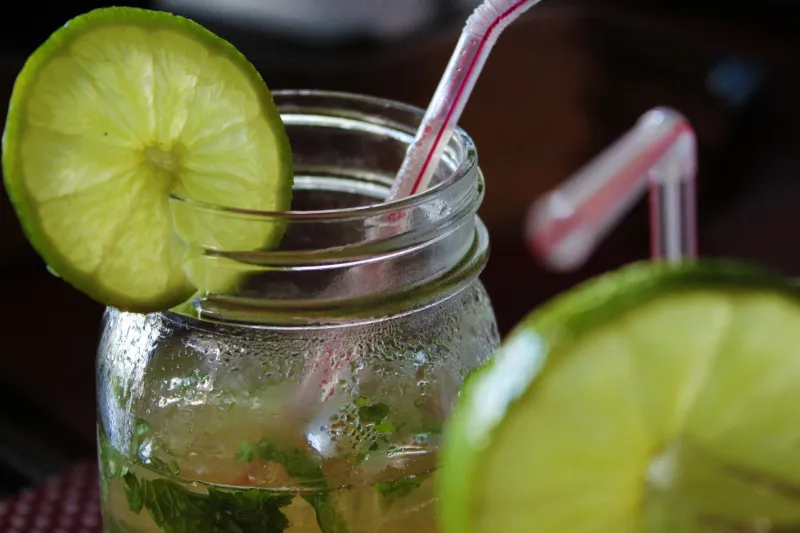
The shrub is, in its oldest form, an act of patience. Fruit is macerated with sugar, sometimes for days, sometimes for weeks. Vinegar—apple cider, white wine, or something more obscure—is introduced. Time does its quiet work. The result is a syrup of concentrated tartness and layered sweetness that can extend the life of fruit well beyond what nature intended and add a dimension to a drink that straightforward sweeteners cannot approach.
Americans were making shrubs long before they were making cocktails. Colonial households produced them as a means of preservation, and they passed into the early tavern culture of the eighteenth century as a component of punches and mixed drinks. By the middle of the nineteenth century, they had largely receded, displaced by the abundance of fresh citrus and the industrialization of the sugar trade. For well over a century, the shrub was a footnote—interesting to historians, invisible to drinkers.
Then, sometime in the past decade, it returned. And its return has not been quiet.
A Syrup Becomes a Statement
To understand why the shrub's revival matters beyond the merely culinary, one has to understand what it has come to represent in the current cocktail conversation. In certain bars—particularly those aligned with what might loosely be called the 'fermentation-forward' or 'farm-to-glass' movement—the shrub has become a kind of philosophical declaration. It signals a commitment to process, to time, to the idea that complexity cannot be purchased ready-made but must be cultivated.
This is a coherent and in many ways admirable position. The best shrubs being produced today, whether in professional bar programs or by small-batch producers like Tait Farm Foods in Pennsylvania or the various craft vinegar makers who have proliferated across the Northeast and Mid-Atlantic, are genuinely remarkable things. They carry the character of their source fruit with an intensity that cooked syrups cannot replicate, and their acidity functions differently in a drink than lemon or lime juice—softer in attack, more sustained in finish.
But the shrub has also attracted a different kind of adherent, and it is here that the philosophical fracture becomes visible.
Patience as Shorthand
For some bartenders, the shrub represents not a commitment to slow process but an efficient shortcut to perceived sophistication. A cocktail menu that features a house-made raspberry-black pepper shrub communicates craft, locality, and culinary seriousness without requiring the bartender to have any particular mastery of fermentation science, vinegar chemistry, or the historical context from which the preparation emerged.
This is not a cynical observation so much as a structural one. The craft cocktail movement has always been vulnerable to the aestheticization of process—to the adoption of the symbols of serious work without the underlying discipline. Shrubs, with their visual appeal, their narrative convenience, and their relative accessibility as a preparation, are well-suited to this kind of appropriation.
The distinction matters because the two approaches produce meaningfully different drinks. A shrub made with genuine attention to fermentation variables, fruit quality, and the balance between sweetness and acidity will behave differently in a cocktail than one assembled quickly from commercial apple cider vinegar and frozen fruit. Both can be called shrubs. Only one of them is doing what a shrub is supposed to do.
The Terroir Question
Underlying the shrub debate is a larger argument about terroir—a concept the American craft spirits world borrowed from wine and has been arguing about ever since. The most ambitious shrub programs are explicitly terroir-driven: they use locally sourced fruit, regional vinegar cultures, and preparation methods that reflect the particular conditions of a place and season. The shrub, in this reading, is a way of putting geography into a glass.
This is an appealing idea, and not an empty one. A shrub made from Concord grapes grown in the Hudson Valley and fermented with a local cider vinegar does carry something of its origin—not in the mystical sense that wine terroir sometimes implies, but in the straightforward sense that different raw materials produce different flavors, and that the flavors of a place are worth preserving and communicating.
The counterargument, made with some force by bartenders who are skeptical of the terroir framing, is that the cocktail has always been an act of transformation rather than preservation—that the point is not to express an ingredient in its most natural state but to combine ingredients in ways that produce something none of them could achieve alone. On this view, the shrub's terroir claims are a category confusion: the drink is not a vehicle for agricultural documentation but for pleasure.
What the Argument Is Really About
The shrub debate is, at its core, a debate about what the craft cocktail is for. Is it a vehicle for historical recovery, reconnecting drinkers to preparations and flavors that industrial food culture erased? Is it a platform for culinary experimentation, using fermentation and other slow processes to achieve complexity unavailable through conventional means? Or is it, finally and most honestly, about making drinks that taste good to the person holding the glass?
These positions are not mutually exclusive, but the emphasis matters. Bars that lead with process—that foreground the how of preparation at the expense of the what of the finished drink—risk producing cocktails that are more interesting to read about than to consume. The shrub, with its built-in narrative of patience and transformation, is particularly susceptible to this problem.
The best use of a shrub, historically and practically, is invisible. It is the thing in the drink that you cannot quite identify—the note of acid that is not quite citrus, the sweetness that carries a slight fermented edge—that makes you set the glass down and think. That effect requires not just a good shrub but a bartender who understands where it belongs and how much of it the drink can absorb.
Patience, in other words, is not only a virtue in the making of a shrub. It is a virtue in its application.