The Art of Leaving Well Enough Alone: Restraint as the Master Bartender's Highest Skill
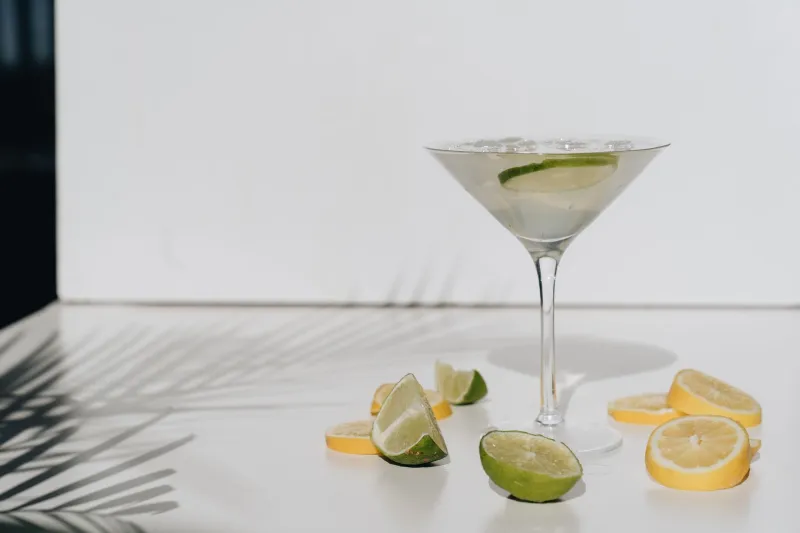
There is a Martini story that has circulated in various forms for as long as people have been arguing about Martinis, which is to say for a very long time. In one version, it is attributed to Somerset Maugham. In another, to Noël Coward. The details vary, but the principle is consistent: the ideal Martini is made by filling a glass with gin and then glancing briefly in the direction of France. The vermouth is present only as an idea.
The story is usually told as a joke. It is also, if read carefully, a precise statement about proportion, restraint, and the difference between what is in a drink and what a drink is. The Martini that Maugham or Coward or whoever actually said this was drinking was not a minimalist drink because its maker had run out of ideas. It was minimal because its maker understood exactly what the drink required and had the discipline to stop there.
This is a rarer capability than it appears.
The Proliferation Problem
The contemporary American cocktail menu reads, in many establishments, like a catalog of ambition. Seven-ingredient drinks are common. Nine are not unusual. At the furthest reaches of the form, one encounters preparations with so many components—liqueurs, tinctures, house-made infusions, finishing sprays, garnishes that require their own preparation—that the base spirit has been effectively buried under a archaeology of flavor.
This is not, in itself, a moral failing. Complexity can be genuinely achieved, and there are bartenders working today who manage multiple ingredients with real skill, producing drinks in which every element earns its place and contributes something that could not be replicated by a simpler construction. But these bartenders are rarer than the menus suggest, and the cultural conditions of the current moment—the premium placed on novelty, the social media incentive to produce visually and conceptually striking drinks, the professional pressure to demonstrate range—work consistently against the exercise of restraint.
The result is a great many drinks that are interesting in description and exhausting in consumption.
What the Old Manuals Teach
Pull any of the serious American bar manuals from the period between, roughly, 1860 and 1910, and one is immediately struck by the economy of the recipes. The Whiskey Cocktail in Jerry Thomas's 1862 guide is whiskey, sugar, bitters, and water. The Gin Sling is gin, sugar, water, and nutmeg. The Old-Fashioned, in its various early forms, is spirit, sugar, bitters, and ice—four elements, each doing a specific and irreplaceable job.
These are not simple drinks in the sense of being unsophisticated. They are simple in the sense that every component is load-bearing. Remove any one of them and the structure fails. Add anything to them and you are making a different drink—not necessarily a worse one, but a different one, and one that had better justify the addition.
The bartenders who developed and refined these preparations were not working within narrow parameters because they lacked access to more ingredients. By the latter half of the nineteenth century, the American bar was stocked with an extraordinary range of spirits, liqueurs, cordials, and bitters. Thomas himself used dozens of distinct products across his recipes. The restraint in the classic cocktail was a choice, not a limitation.
The Discipline of the Negative
Asking what to leave out of a drink is a fundamentally different cognitive exercise than asking what to put in. The additive mode—the mode in which most cocktail development currently operates—is generative and relatively forgiving. If an ingredient does not quite work, it can be adjusted or replaced. The process of addition has a natural momentum: more can always be tried.
The subtractive mode requires a different kind of judgment. It demands that the bartender know, with some precision, what the drink is supposed to do—what experience it is meant to produce, what the relationship between its components should feel like—and then identify every element that does not contribute to that specific goal. This is harder than it sounds, because the instinct to add is almost always more available than the instinct to remove.
Harry Craddock, whose Savoy Cocktail Book of 1930 remains one of the most useful bar manuals ever published, was characteristically terse on the subject of garnishes: the drink, he implied, should not require decoration to communicate its virtues. This was not aesthetic asceticism. It was a professional position—the position that a drink which needs a garnish to be interesting has not yet been made interesting enough by the things inside it.
Restraint as Knowledge, Not Timidity
It is important to distinguish between restraint that comes from mastery and restraint that comes from inexperience or lack of imagination. The bartender who makes a simple drink because they do not know what else to do is not exercising the same faculty as the bartender who makes a simple drink because they have considered every other possibility and rejected it.
The latter requires a comprehensive knowledge of what is available—of the full range of spirits, modifiers, acids, sweeteners, and aromatics that could theoretically be introduced—combined with a clear enough sense of the drink's purpose to recognize when each of those possibilities would detract rather than contribute. This is, in effect, a negative expertise: the knowledge of what not to do.
Several of the bartenders I have spoken with over the years who are most admired by their peers share a particular habit: they begin cocktail development by building the simplest possible version of a drink and then ask, with genuine rigor, whether anything they might add would improve it. Most of the time, the answer is no. The discipline is in accepting that answer.
The Empty Space
There is a concept in music—in jazz particularly, where its application is most visible—of the importance of the rest, the silence between notes. Miles Davis understood this with particular clarity: the spaces in his solos were not pauses in the music but part of the music, as meaningful as the notes themselves. The notes defined the silence; the silence defined the notes.
The empty space in a cocktail works by a similar logic. A drink with four components has room—room for the drinker's attention to move between flavors, room for the spirit to express itself, room for the palate to rest and reset. A drink with nine components has no such room. Everything is present simultaneously, competing for attention, and the result is often a kind of flavor noise from which no single element can be clearly heard.
The master bartenders of the nineteenth century did not know the Miles Davis comparison, but they understood the principle. They built drinks in which something was always held back—in which the glass contained, alongside everything that was in it, the implication of everything that had been considered and set aside. That implication, that restraint made tangible, is what the best drinks have always offered. It is what the current era, in its enthusiasm, has most conspicuously lost.