The Five-Minute Drink: How the Compressed Cocktail Hour Is Rewriting the American Glass
There was a time—not so distant that it requires archaeological excavation—when the American cocktail hour was understood to be precisely that: an hour. Not a suggestion, not a marketing construct, but a genuine pause in the machinery of the day. Men and women gathered at bars and in parlors, ordered drinks that rewarded patience, and remained long enough for the ice to do its work on both the glass and the conversation. The Manhattan was not a vehicle for rapid intoxication. It was a ritual object, and rituals require time.
That time, by most evidence, has been substantially compressed. The contemporary American drinking occasion has grown shorter, faster, and more purposeful—in the sense that it now serves a narrower set of purposes. Whether this compression is a product of longer working hours, the colonization of leisure by the smartphone, or simply a cultural impatience that has spread from the drive-through to the cocktail lounge is a question worth examining. What is less debatable is the effect it has had on what Americans order, how bartenders are trained to deliver it, and what distillers believe their customers will actually notice.
The Clock Behind the Bar
The historical cocktail hour, in its fullest expression, was a buffer zone. It separated the obligations of work from the obligations of the table, and it permitted the kind of gradual unwinding that a well-made drink facilitates almost physiologically. The first Martini of the evening arrived not as a destination but as a beginning. There would be a second. Possibly a third. The pacing was social, not transactional.
Today, the structure of that occasion has changed in ways that are measurable. Happy hour programming at American bars has, in many markets, been legally constrained, compressed to ninety minutes or less, or eliminated altogether in favor of all-day pricing that removes the temporal ritual entirely. The after-work drink, where it survives, frequently happens in a window of forty-five minutes between the end of one obligation and the beginning of another—a dinner reservation, a train, a child's bedtime. The ceremonial has become the expedient.
The bar industry has responded, consciously or not, in kind. Aperitif-style drinks—lower in alcohol, lighter in construction, easier to consume without the commitment of a full spirit-forward cocktail—have grown substantially in prominence at American bars over the past decade. The spritz, in its many iterations, is not simply a trend imported from Italian café culture. It is a drink engineered, whether its advocates acknowledge it or not, for the abbreviated occasion. It is sessionable in the truest sense: it asks very little of the drinker in exchange for a pleasant twenty minutes.
Speed, Efficiency, and What Gets Left Behind
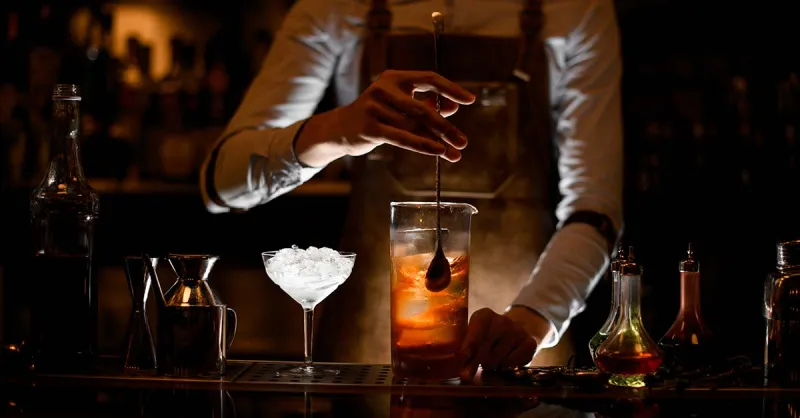
The compression of the drinking occasion has exerted pressure not only on what is ordered but on how drinks are constructed. The stirred cocktail—the Old Fashioned, the Negroni, the Rob Roy—demands time at the bar that the shaken drink does not. A properly diluted stirred drink requires sixty seconds of deliberate attention from the bartender and a willingness from the drinker to wait. In a bar operating at volume, with guests who have forty-five minutes before their dinner reservation, that sixty seconds is not always available.
The consequence is visible in the evolution of bar menus across American cities. Batched cocktails, pre-diluted and stored in bottles or on draft, have become standard practice at high-volume establishments. The argument for batching is often made on grounds of consistency—and it is not wrong. A properly batched Negroni can be a very good Negroni. But the ritual of watching a drink assembled, of seeing the ice cloud and the liquid clarify, of receiving something that was made in response to your presence, is lost in the transaction. The drink arrives complete. The ceremony has been edited out.
Distillers, for their part, have not been indifferent to these shifts. The growth of ready-to-drink spirits products—canned cocktails, pre-mixed bottles, single-serve pouches—represents an industry reading the same cultural signals the bar world has been absorbing. These products are optimized not for contemplation but for consumption in motion: on a stadium concourse, at a backyard gathering, in a hotel room. They are not inherently inferior products, and some are genuinely accomplished. But they represent a philosophy of drinking in which the preparation of the drink and the drinking of the drink have been fully separated, the former having been performed somewhere distant and anonymous so that the latter can occur without interruption.
What the Unhurried Drink Still Knows
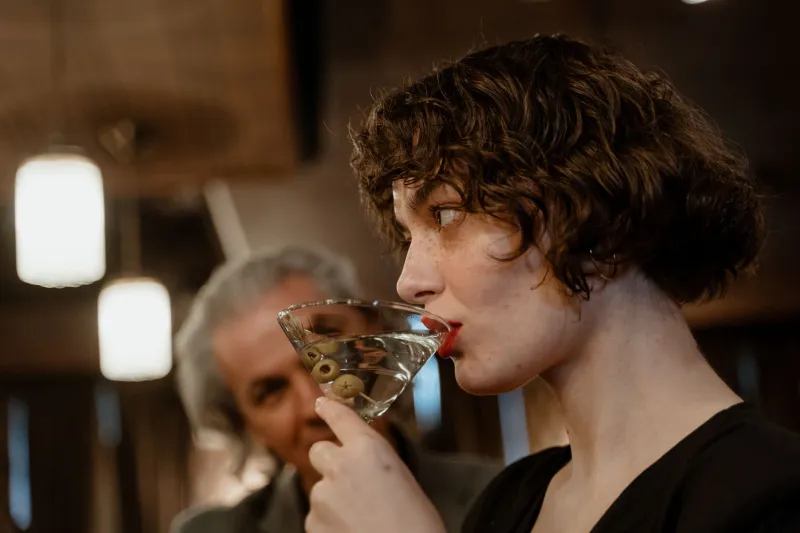
None of this is to suggest that the compressed cocktail occasion is without its pleasures, or that the American bar is in terminal decline. The evidence, in fact, suggests something more complicated. The very same cultural moment that has produced the five-minute aperitif has also produced a significant and serious constituency for the long, slow, spirit-forward drink—for the whiskey tasted over an hour rather than consumed in fifteen minutes, for the aged rum sipped in the manner of Cognac, for the Martini that arrives cold enough to require patience before the first sip.
These two drinking cultures coexist, sometimes in the same establishment, occasionally in the same person on different evenings. The question for the bar industry—and for anyone who takes seriously the history and craft of American drinking—is whether the accommodation of speed comes at the cost of depth. Whether the optimization for the abbreviated occasion gradually erodes the knowledge, the technique, and the expectation that made the unhurried drink possible in the first place.
The great bartenders of the pre-Prohibition era were not, by the evidence of their manuals and their reputations, fast workers. They were precise workers. Jerry Thomas did not rush. The speed came later, when the culture demanded it, and something was lost in the acceleration—something that took most of the twentieth century to partially recover.
The compressed cocktail hour is not a catastrophe. But it is worth watching, with the same attention one might give to a drink that is diluting a little faster than intended. The ice is doing its work. The question is whether we will notice before the glass is empty.