Brandy at the Crossroads: The Quiet War Over What Cognac Is Allowed to Become

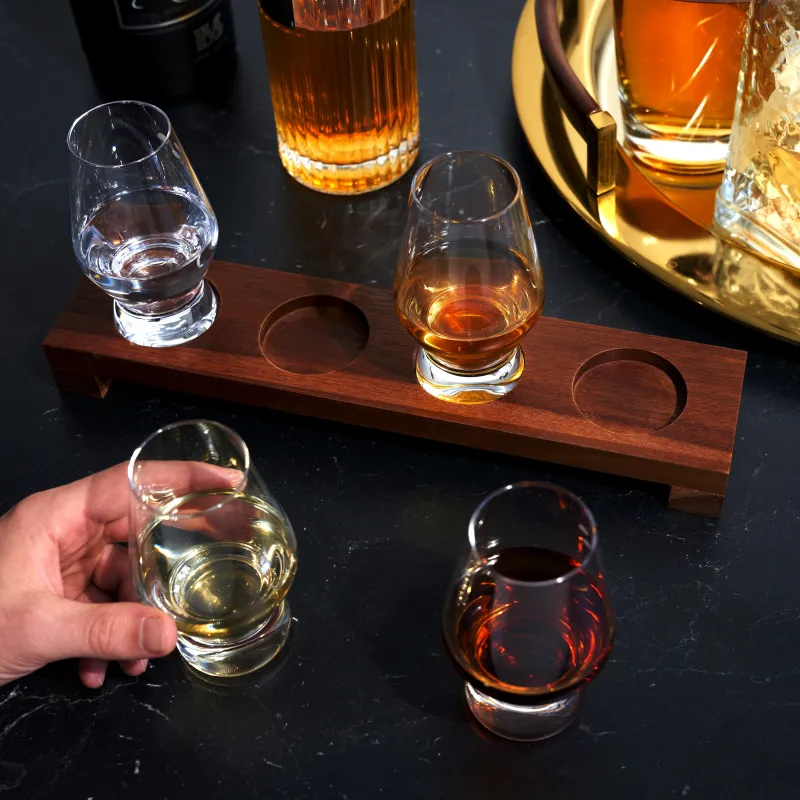
Photo by Photo by Robin Canfield on Unsplash on Unsplash
There is a particular kind of discomfort that settles over a room when someone orders a Cognac Sour at a traditional French-owned establishment. The bartender may comply, graciously, professionally. But watch the eyes. Something flickers there—a faint wince, perhaps, or a studied neutrality that takes effort to maintain. That small, telling moment is the epicenter of one of the more fascinating disputes currently running through the spirits world: the question of whether Cognac belongs in the cocktail shaker, and who exactly has the standing to answer it.
For the better part of two centuries, Cognac occupied a position of almost liturgical dignity in the hierarchy of distilled spirits. Produced within a strictly demarcated region of southwestern France, aged in Limousin or Tronçais oak, and governed by appellation rules that would make a Burgundy négociant nod in approval, it was understood to be a spirit for contemplation—not construction. You did not build things with Cognac. You received it.
The American Bartender's Counterargument
American mixologists, characteristically unburdened by inherited reverence, have been making a different argument for the better part of a decade. Their case is both historical and practical. Historically, it is airtight: Cognac was the backbone of the American cocktail before Prohibition remade the nation's drinking habits. The Sidecar, the Stinger, the Brandy Crusta—that last one invented in New Orleans in the 1850s and now recognized as a likely ancestor of the modern cocktail form itself—all depended on brandy as their foundation. The Sazerac, before rye whiskey claimed it, was a Cognac drink. To treat the spirit as too precious for the glass is, from a purely historical standpoint, to misread the record.
Practically speaking, the case is equally compelling. Cognac's complexity—its layered fruit, its vanilla and floral notes from oak aging, its particular brandy weight—makes it an exceptionally versatile cocktail component. It plays beautifully with citrus. It deepens a punch in ways that bourbon cannot quite replicate. It bridges the gap between the sweetness of aged rum and the austerity of single malt Scotch. Bartenders who have worked with it seriously tend to become evangelists.
In cities like New York, San Francisco, and New Orleans, a quiet rehabilitation has been underway. Menus at serious cocktail establishments now feature VS and VSOP expressions not as afterthoughts but as deliberate choices. Some bars have gone further, building entire cocktail programs around Cognac's range, using younger expressions for their brightness and older ones for their depth.
What the Houses Fear
The French producers—the great houses of Hennessy, Rémy Martin, Courvoisier, and Martell, alongside the smaller artisan operations of the Charente—are not uniformly opposed to this development, and it would be inaccurate to paint them so. Several have actively courted the cocktail market, funding competitions, sponsoring bar programs, and producing educational materials aimed at American mixologists. The economics are not negligible: the United States remains one of Cognac's most important export markets, and the cocktail culture's influence on spirit consumption is well documented.
But there is a tension that persists beneath the marketing cooperation. It is not merely about prestige, though prestige is certainly part of it. The deeper anxiety concerns perception and positioning. If Cognac becomes, in the American imagination, primarily a cocktail ingredient—if it is shelved mentally alongside triple sec and bitters as a supporting player—then the patient, expensive work of aging and the premium pricing it justifies become harder to defend to the consumer. The fear is not that people will mix Cognac. The fear is that mixing will become the primary lens through which the spirit is understood.
There is also a subtler cultural dimension. The French relationship with Cognac is bound up with geography, tradition, and a form of national identity that does not translate cleanly across the Atlantic. When an American bartender reaches for a VSOP to build a riff on a classic template, they are engaging in an act of creative reinterpretation that feels entirely natural within the context of American bar culture. Viewed from Jarnac or Cognac, that same act can look like a category being casually dismantled.
The Hip-Hop Interlude and Its Lessons
It is worth pausing here to acknowledge a preceding chapter in Cognac's American story—one that the spirits industry has not always known how to discuss. Through the 1990s and into the 2000s, Cognac achieved massive commercial penetration in the United States through its embrace by hip-hop culture. Artists referenced specific brands with a frequency that constituted unpaid advertising of extraordinary reach. Sales climbed. The houses benefited enormously.
And yet the cultural discomfort within certain parts of the industry was palpable. A spirit associated with aristocratic European leisure was now being consumed in contexts entirely foreign to its origins, and the response from some quarters was ambivalent at best. The episode is instructive because it established a precedent: Cognac's American audience has never been content to receive the spirit on the terms the producing region preferred. It has consistently found its own terms. The current cocktail moment is simply the latest iteration of that pattern.
Defining Authority Over a Bottle
The deeper philosophical question underneath all of this is one that applies well beyond Cognac: who holds legitimate authority over how a spirit is consumed? The producer, who created it and understands its construction? The regulating appellation body, which defines what the spirit legally is? The bartender, who has mastered its behavior in combination? The consumer, who simply drinks it?
The honest answer is that authority is distributed and contested, and has always been so. Scotch whisky producers spent decades insisting their product was not suitable for mixing, and then watched helplessly—and eventually profitably—as the highball and the Penicillin cocktail expanded their market. Mezcal's artisan producers have navigated similar tensions as the spirit moved from regional Mexican tradition to global cocktail ingredient. Cognac is simply the current site of a recurring negotiation.
What the best American bartenders have understood, and what the more forward-thinking French producers are beginning to accept, is that mixing Cognac and venerating it are not mutually exclusive activities. A bartender who builds a thoughtful, well-constructed cocktail around a fine VSOP is not degrading the spirit—they are extending its conversation, bringing it to palates that might otherwise never encounter it, and demonstrating its range in ways that neat service alone cannot. That is not disrespect. That is advocacy.
Where the Glass Stands Now
The war over Cognac's identity is not, in truth, a war at all. It is a negotiation conducted in cocktail menus, trade publications, marketing budgets, and the quiet decisions of bartenders stocking their back bars. It is ongoing and unresolved, and it is likely to remain so, because the interests involved are genuinely different and the cultural distances genuinely wide.
What it reveals, for anyone paying attention, is that a spirit's meaning is never fixed. It is made and remade by everyone who touches the bottle—from the distiller drawing off the first cut in Charente to the bartender measuring a pour in Manhattan. Cognac has survived phylloxera, two world wars, Prohibition's shadow, and several reinventions of its own market. It will survive the cocktail renaissance. The more interesting question is what it will look like on the other side.