What Runs Beneath the Still: The Forgotten Role of Water in America's Great Whiskey Tradition
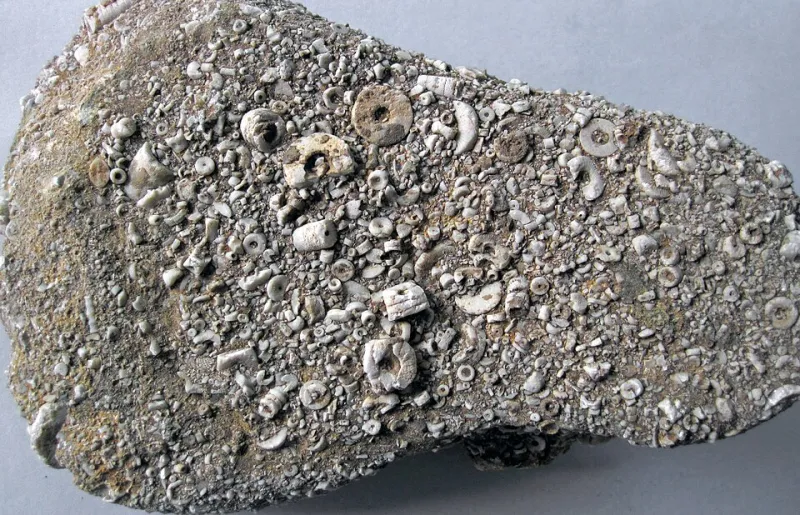
Photo: James St. John, CC BY 2.0, via Wikimedia Commons
There is a tendency, when tracing the origins of great whiskey, to reach for the romantic explanations first. The cooperage. The climate. The particular strain of corn a family has grown on the same hillside for six generations. These are the stories that sell bottles, and they are not without merit. But there is an older, quieter story running beneath all of them — one that moves through limestone bedrock and peat bogs, through underground aquifers and mountain springs, and that has shaped the flavor of American and Scotch whiskey more profoundly than almost any other single variable.
That story is about water.
The Chemistry Nobody Advertised
Water is used at nearly every stage of whiskey production: mashing, fermentation, proofing, and cooling. A distillery's output, in sheer volume terms, is overwhelmingly water. Yet for most of the industry's commercial history, the specific mineral content of that water was treated as background information — a footnote rather than a headline. Distillers knew it mattered. They built their operations near particular springs and wells for reasons that were entirely practical. They simply did not speak about it in the language we now associate with terroir.
In Kentucky, the story begins with calcium-rich limestone. The karst geology of the Bluegrass region filters groundwater through ancient rock formations, stripping it of iron — which would turn whiskey dark and metallic — while loading it with calcium and magnesium carbonates. This mineral profile encourages robust yeast activity during fermentation and contributes to the soft, rounded mouthfeel that distinguishes classic Kentucky bourbon from spirits produced in regions with harder or more acidic water. The distillers who settled along the banks of the Salt River and Elkhorn Creek in the late eighteenth century did not commission geological surveys. They simply noticed, over time, that the whiskey made here tasted different. Better, many of them believed. The water was doing work they could not entirely explain but were reluctant to abandon.
Scotland's Peat and the Question of Mineral Memory
Across the Atlantic, the situation was different in character but identical in principle. Scotch whisky's regional diversity — the smoky iodine of Islay, the floral delicacy of Speyside, the austere mineral quality of the Highlands — has long been attributed to barley, peat levels in the malt, and the shape of the copper pot still. All of these matter. But the water feeding those stills carries its own identity.
Speyside distilleries draw from granite-filtered springs that produce exceptionally soft, low-mineral water, which many distillers believe promotes a cleaner, more fruit-forward fermentation. On Islay, water frequently passes over or through peat before reaching the distillery, picking up organic compounds that contribute phenolic character even before the malt is smoked. The water on Islay, in other words, is already doing something before the distiller touches it. This is not incidental. It is foundational.
What strikes the historian in all of this is how thoroughly these facts were understood — at least empirically — by working distillers generations before the modern craft movement arrived to theorize about them. The men and women who built the great distilling regions of Kentucky and Scotland were not academics. They were pragmatists who paid close attention to what worked and why. Water quality was among the first things they evaluated when selecting a site. It shaped their decisions as surely as land prices and proximity to grain markets.
When Craft Distillers Rediscovered the Well
The explosion of craft distilling in the United States over the past two decades has produced a great deal of earnest conversation about local grain sourcing, heritage yeast strains, and small-batch production philosophy. What has been slower to emerge — though it is now gathering momentum — is a serious, technically grounded conversation about water.
Some of the more thoughtful producers in the current wave have begun treating their water source as a first-order consideration rather than an afterthought. Distilleries in the Pacific Northwest have noted that the exceptionally soft, low-mineral glacial runoff feeding their operations produces a lighter, more delicate new-make spirit than the same recipe might yield in, say, the limestone-fed heart of Kentucky. Others, particularly in the Southwest, have had to grapple with hard, high-mineral municipal water supplies that require treatment before use — and have begun asking what that treatment costs them in terms of flavor.
This is not a trivial question. Water treatment — reverse osmosis, carbon filtration, deionization — can standardize a water source, but standardization is not the same as optimization. A distiller who strips all mineral content from their water and then adds back selected compounds is, in effect, trying to engineer a geological history they do not have. Whether that approach can replicate what nature provides freely in a limestone-rich watershed remains a genuinely open debate.
Terroir Before the Word Existed
Wine culture gave American consumers the vocabulary of terroir — the notion that a place's soil, climate, and geography express themselves in what is grown and produced there. The concept is useful, and its application to spirits is not merely metaphorical. But it is worth noting that distillers were practicing terroir-consciousness long before Burgundy exporters made the word fashionable in the United States.
When early Kentucky distillers insisted on water from a particular spring, or when Scottish distillers refused to relocate their operations even as transportation infrastructure improved and cheaper sites became available elsewhere, they were making a statement about place. They understood, in the most practical terms possible, that the character of what they made was inseparable from the character of where they made it — and that water was the most intimate connection between the two.
The broader spirits world has been slow to honor this insight with the same rigor applied to, say, barrel entry proof or grain bill composition. That is beginning to change. As analytical chemistry becomes more accessible and as a new generation of distillers asks harder questions about what distinguishes their product from the next one on the shelf, water is returning to the conversation it never should have left.
The Glass Remembers
For those who drink whiskey with genuine attention, the influence of water is not merely theoretical. It is present in the weight of the spirit on the palate, in the way a bourbon from the Bluegrass seems to settle rather than spike, in the way a Highland single malt from a granite-spring distillery resolves to something clean and mineral at the finish. These qualities are not accidents of aging or blending alone. They are, in part, the memory of water — of what flowed through limestone and granite and peat before it ever touched a grain of corn or barley.
Great whiskey has always been a collaboration between human craft and geological fortune. The stills and the barrels and the hands that tend them deserve their credit. But beneath all of it, quite literally, runs the water. It has been there from the beginning, doing its quiet, essential work — and it is past time to say so plainly.